zaterdag 23 februari 2013

A Christmas Carol


At Christmas London seems a dead provincial city. No public transport, except exceptionally expensive taxi's. I have no idea what all these foreign visitors I encountered in my hotel this morning for breakfast will be doing today. Most pubs and restaurants are closed as well. Even the one at the hotel. The English seem to take that for a merry Christmas. It's heavily clouded over Queen's Gate Gardens. Large parts of the country are flooded because of the weather resembling a deluge. There's a lot of red around. Where ever you go people with Santa hats, even in Brussels yesterday when checking in for the Eurostar. Only the UK Border Control refrained from wearing them it seemed. They carried out surprisingly severe checks the English, both at the Brussels' terminal and at King's Cross. Every loudspeaker spits out the usual Anglo-Saxon Christmas garbage. Sentimental rubbish that makes one sadder than the saddening weather does.

My London cousin is expecting me for Christmas dinner. At breakfast I looked at the map how to get to her. I have to walk from Chelsea to Fulham. Charles Dickens, writer of world famous Christmas carols, was an enthusiastic walker. He walked great distances with ease and sometimes in the middle of the night. He knew the way though. I always lose mine. Even yesterday, walking the short distance from the underground station Gloucester Road to my hotel I managed to take a wrong turning though I stayed there more than once. Two helpful young ladies, miraculously without Santa hats, put me back on my trail. I could make life easy and call a taxi but even without the Christmas surcharge I reckon them much too expensive. Besides I need some exercise in this week of eating and drinking.

Dickens could be rather sentimental. Half of lettered Britain was in tears at the death of Little Nell. Even the Queen it was rumoured. I wonder what Dickens would have thought of the imbecillic practice of Santa hats. What would he have thought of being forced to hear the continuous droning of I'm dreaming of a white Christmas or even worse of that ear torturing Jingle bells? I have to set out on my walk which I estimate at about an hour. Unless I lose my way again. In which case I have to rely on Marley's spirit and call a taxi after all, even if it has a Santa hat at the wheel. Scrooge will settle the bill.


©C.A. Klok

London, Christmas 2012

zondag 17 februari 2013

Forty-two


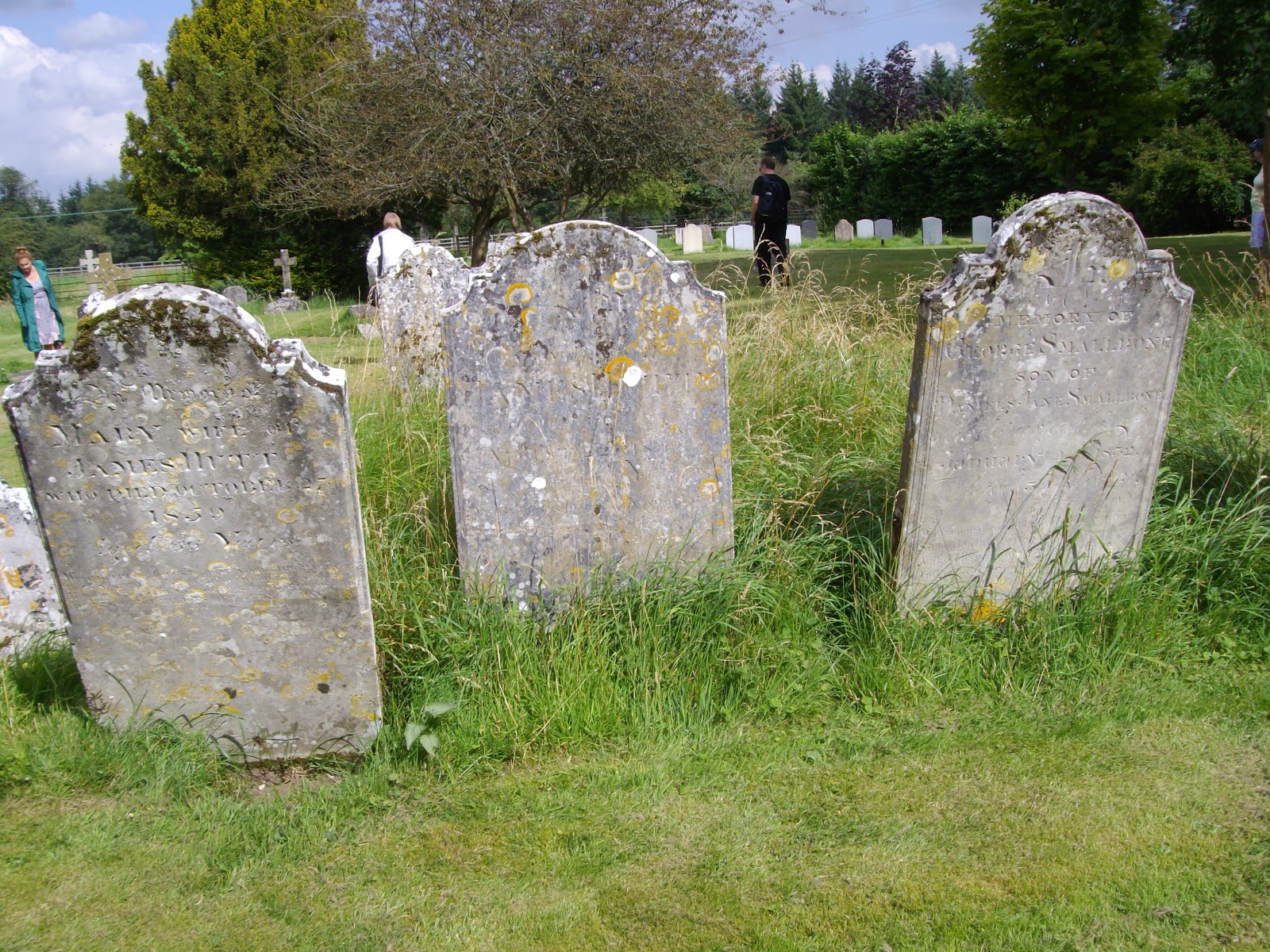
Jane Austen was only forty-two when she died. I knew but I only started realizing it when I saw a commemorative plaque in the church of Steventon, Hampshire. The church where both her father and her brother disemminated the word of God. We will never know whether she'd already reached her apogee as a writer. Probably not, but we can only judge her by the works she left, not by what she left unwritten.

Most of the time I studied History together with P. He would definately do a Ph.D., but his work on it was interrupted by a dismal love affair in the wake of which a vicious variety of cancer manifested itself. P. died of it. At forty-two. He was a better student than me. He comes to my mind after distancing myself from the group of people I am travelling with. I walk among the crumbling graves in the ancient churchyard. It is deathly quiet. I notice two horsmen in the distance but they're too far away for me to hear the horses.

I think of Jane Austen and remember the enthousiasm with which Stella talked about her to Andreas Pappas who translated Emma into Greek. He was on a visit in Dordrecht. I haven't got his telephone number and neither his address. His e-mail doesn't work. It's over four years but I haven't yet been able to tell him that Stella passed away.

©C.A. Klok


woensdag 13 februari 2013

Niki Marangou (1948-2013)


Once I had roasted pigeon. On Cyprus in the autumn of 2005 at the home of Niki Marangou, the poetess. She was one of the people that helped us tremendously when Stella and I were preparing our anthology of Cypriot literature, Wij wonen in een taal (We are living in a language) which was published in 2004. We went to Cyprus to deliver the book. Niki invited us for dinner in her beautiful garden in Agios Dometios. In that garden we saw a litter of pups that delighted us. We were going to have a dog like that once we would settle in Greece.

Two years after Stella died I travelled to Cyprus again. This time for a history conference. Almost a soon as I arrived at the hotel Niki sent me an invitation. I took her Stella's posthumous poetry collection. Again we were sitting in that beautiful garden, Niki, the writer Nikos Nikolaou-Hatzimichaïl, a good friend, and me. After a sun-drenched afternoon we left. Niki gave me a handmade booklet with some of her poems. I still cherish it. We would soon meet again, either on Cyprus or in Thessaloniki. Niki came to Thessaloniki once or twice when I happened to be in Holland, but we remained in touch. Nikos sent me his wonderful poetry collection Διθαλάσσου. Niki travelled through Turkey, India and the Near East and sent me colourful descriptions of her wanderings. I hoped she would publish them in a book. I also hoped she would once be invited by Poetry International, but up to now the organisers have always scrupulously ignored my suggestions.

On Friday morning I looked at Facebook. Someone had shared a link with the newspaper To Vima. I saw Niki's photograph and thought 'another literary award.' Then I read the Greek word for perished. My hart stopped beating for a second. While visiting Egypt she died in a car accident somewhere near Faiyum. The Egyptian police has still not given any statement on how the accident happened. The Cypriot foreign secretary spoke of a great loss for Cyprus. Nor only for Cyprus but for all of the Greek speaking world and for European literature. Besides a much awarded writer she also was a gifted visual artist and dramatist. I think of that beautiful garden in Agios Dometios and of the immense void she leaves behind.

©C.A. Klok


woensdag 6 februari 2013

Illusions


In July 2010 I spent the night in a ship's cabin that made me think of a hobbit house. It had the same round windows. It was on board the Stena Hollandica in which I sailed from Harwich to Hoek van Holland. It was a cabin right under the bridge, looking forward to the prow. I woke up just after five in the morning when the sun began to rise. It looked like the day would be rainy, as the clouds overhead were traveling east like us, towards the narrow brightening line of the Dutch coast. The Maasvlakte was barely recognizable from a wisp of smoke.

Imagine you embarked in Harwich full of expectations after flying to London from some backwater in the USA. Your head filled with the idea that Holland is a country of flowers, particularly tulips, of green fields with a variety of cattle, of low skies painted by Roelofs or Weissenbruch, and of seventeenth century windmills, inhabited by people walking on wooden shoes and an idiot sticking his finger in the dyke saving the country from a disastrous flood. There still is a fair amount of people in the States that share these illusions, like the roughly thirty million loonies that believe Judgement Day is imminent.

Such a traveler will see how the plume of smoke on the horizon grows and finally arrives in Hoek of Holland, where he is greeted by a mass of horrendously looking modern windmills in a cloud of polluted air. After landing he has to travel by car through the Botlek with its ugly chemical industry and oil refineries or he has to set off in a train without toilets for Rotterdam which looks like a gigantic building site inhabited by ill-mannered cutthroats. To avoid a culture shock it's probably preferable to believe in that other nonsense story going about the USA telling people that you'll find someone selling dope on every Dutch street corner and that you'll see almost naked girls eager to have sex with you behind every window.

I disembarked in the rain, took the train, changed trains at the everlasting building site and observed, as we crossed the railway bridge over the Oude Maas, how the tower of Dordrecht cathedral dominated the view with an imperious dignity. Another illusion I thought.

©C.A. Klok

zondag 3 februari 2013

Fairy tales


In Sunday school we had a teacher with a clubfoot, but she was a great storyteller. We were fascinated by both foot and stories, though rather more by the stories. One of them was about a dream the pharao of Egypt had. In it he saw seven fat and seven skinny cows. He couldn't make much of it and was looking for some explanation. A while before a certain Joseph, an Israelite sold as a slave by his loving brothers, was thrown in prison. As a slave he belonged to the household of a rich man called Potiphar, who was married to Zelikah. Zelikah turned out to be a jealous as well as a somewhat randy woman, who loved a good intimate talk with Joseph when Potiphar was out and about his business. If she was as beautiful as her name, I wouldn't have had second thoughts, but Joseph was a decent man and refused both talk and touch. Maybe she was as ugly as hell, who knows? Whatever, she accused honest Joseph of having raped her and so he was thrown in prison. It's quite like the way some teen-age schoolgirls take revenge on a teacher that refuses to turn an insufficient mark into a good. Potiphar blindly trusted Zelikah, although Joseph had made himself quite popular with him. Many schoolboards blindly trust the allegations of an angry pimple-faced young lady. The accusations are almost always immediately believed and very often the accused has a hell of a job trying to prove his innocence. And even if he succeeds he is usually looked upon with suspicion for the rest of his career. I've been a trade union official long enough to know what I am talking about.

Fate was kinder to Joseph than to many falsely accused teachers. In prison he developed a talent for explaining dreams and gradually his fame got beyond the prison walls. The pharao heard of it and summoned Joseph. He had no trouble dealing with the cows: seven rich and seven bad years. 'Lay up stores in the rich years,' he advised, 'so you won't go hungry during the bad.' Joseph, more or less the first economist in history and one of the very few who wasn't only right but one who was also listened to. You won't find many of those today. The pharao became so enthusiastic that Joseph was promoted from convict into viceroy. In this capacity he saw his loving brothers back during the bad years, when they reported at the border as economic refugees. Economic refugees aren't very popular these days. Fleeing bullets, or a murderous regime is something we can just endorse, but fleeing starvation is something we quite disapprove of in a Europe with a growing number of obese fellow human beings. You would have expected Joseph to refuse the bastards entry, but nothing of it. They were allowed in and well provided for. Such stories even made the club foot charming.

I had to think about the seven rich and the seven bad years when a little while ago I quite suddenly caught the flu and found myself in bed with a fever. In the weeks before I wrote more than usual, one story after the other. When I had the flu, and for quite some days after, I felt extremely feeble and unable to write anything. Having a pile of short stories and a handful of poems didn't make much difference however. Most Dutch writers can't make a living from their books. They're constantly living in bad years if they haven't got a job on the side. I had to think of another story. The one that came to my mind was that of the cricket and the ant by Jean de la Fontaine. Being a cricket I had ignored the invitation by my GP to go and get an inoculation against the flu. I was in Greece at the time and I hadn't got the flu for many years, so why bother? The story of the cricket and the ant was never told in Sunday school. There the holy bible was more than enough and quite correct. Even non-believers like me consider it to be one of the most fascinating books of fairy tales we've got.

©C.A. Klok


zaterdag 26 januari 2013

In perfect harmony


Half past ten on a Saturday morning. I'm on my way to the mill on the Noordendijk to fetch flour. It's cloudy and the streets are wet, but it doesn't rain. Very soon it may. The trees on the Groenedijk and those in nearby Merwesteijnpark are changing colour and dropping their leaves. Autumn has inevitably come. There's hardly anyone on the streets, it looks like Dordrecht was hastely evacuated apart from one or two lost souls. Quite a contrast with yesterday when we were still clinging to the late summer, outdoors at the Villa Augustus, watching the gardeners quietly going about their work.

I cycle past my old school on the Groenedijk. It is surrounded by scaffolding and wrapped in blue rags. It looks like some restoration is on its way. It's quite a wonder the building is still there. A few hundred yards further down the fairly new building of the technical college has completely disappeared. New houses are being built in its place. Small dwellings looking rather dull. I remember the old building which still bore marks from the war, large red crosses that indicated its use as a temporary hospital. It was right across the road from my primary school in the Bankastraat, the future some of my classmates were looking forward to. You had to finish grammarschool to be admitted. My father had a modest position as a civil servant which meant I was sent to the secondary modern. No questions asked. It meant a long road towards university: after the secondary modern (mulo in Holland) two years havo (a kind of minor A-level course), then teacher training college and finally a bachelors and a masters in history from Utrecht University, after which I took a course in American studies at the University of Minnesota. Going there proved to be the most important decision I ever made because it was in Minneapolis I got to know Stella.

Though there is hardly any wind the mill is working slowly in a proud way, a silent but powerful monument. The last of the scores of windmills on the Dordrecht town walls, painted by artists like Albert Cuyp and Van Goyen. They determined the skyline which is now dominated and ruined by highrise buildings on the river banks both at Zwijndrecht and on this side. To reach the mill I have to lift my bike over a concrete ridge which reminds one that the Noordendijk is the main dike protecting the island from both river and sea. When the moment is there this bit of concrete will decide between disaster or salvation.

I lock my bike, a sensible habit even though there is no one to be seen, and enter the mill. There are just one or two customers in the shop inside. Ik buy flour, sunflower seed and stroopwafels. These are for my Greek family that dote on them. They are the main reason for my luggage to be uncomfortably heavy every time I fly to Salonica. While I strap my shopping bag to the bike I think of my fiftieth birthday which we celebrated in the mill in 2001 and particularly of the people present that have died meanwhile. Before I left the house I heard someone on the radio saying we were all becoming older and older and that therefore we shouldn't retire at 65. I don't believe a word of it. He may have been talking about my parents' generation, but when I look at mine and count on my fingers the many friends and relatives that died young, I need at least a second pair of hands. While I cycle back towards home it begins to rain softly. It's one of the rare moments that my mood seems in perfect harmony with the weather.

©C.A. Klok


maandag 21 januari 2013

Never before


We were to come at around two in the afternoon, L. had said. He's sitting in the leather armchair he spends most of his days in of late. What's left of his hair is trailing around his head, his beard has thinned. His hollow cheeks have lost colour, look almost waxen. Behind him the impressive bookcase covering almost all of the wall of the eighteenth century drawing room. When the highest shelves were gradually filling, L. ordered a special stepladder from the same carpenter that built the bookcase. The ceiling is still original and in the care of the Dutch National Trust. L. hates that. Any whitewash needs the approval of an inspector, before and after. That's why the ceiling has slowly turned brownish over the years. For a long time L. was a happy smoker, but two years ago he suddenly gave it up. At first he asked his GP for pills to help him get over it, but when the doctor refused he decided he'd do without and never touched a fag anymore. He made it look an easy thing to do. L. sometimes has a strong mind. Sometimes.

There are thirteen of us. L., his brother and sister and ten friends. To give ourselves an air we chat about the weather. We tell L. that is has been snowing and that there is an icy wind. After that we talk about the Complete Works of Karel van het Reve, of which L. ordered me to buy him volume two just a week ago. L. asks for tea. It's made in the mucky kitchen. Months ago L. ordered his cleaning woman out from fear of losing control and from wanting to check everything that goes on around him. He says we're free to poor ourselves a glass of wine or a beer if we want. He asks for chocolate with his tea.

I imagine L. as I got to know him, forty-six years ago. We were together in class 3A2. Including mathematics. We weren't very good at it, but L. just a little better than me. That's why he is better at playing chess. He was better in footbal too, but I was less shy with the girls. L. remained single. We used to write poems in the school magazine. L. was always coing up with ideas to write about. If he had carried them out he would have published seven books too, like me, or maybe more, but L. didn't always have a strong mind.

The GP is quarter of an hour late, entering without greeting and without an apology. L. looks slightly vexed. He slowly rises and embraces each of us. He follows the doctor and his brother and sister to the bedroom. In the doorway he turns around, lifts a hand and says: 'Well, chow!' Chow, a word I never heard him use before. After fifteen minutes we are allowed in to see. L. lies on the bed, motionless, as relaxed as he wasn't for months.

@C.A. Klok